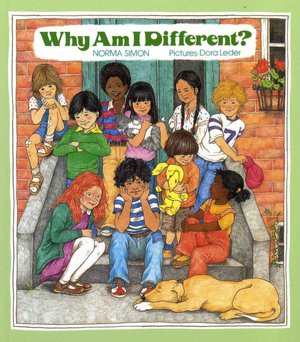
Why Am I Different?
By: Norma Simon
Pictures by Dora Leder
Age Level: 4-8
Grade Level: Pre k-2
Genre: Multicultural
Take a look around your classroom. Isn’t there something about everyone that you can see that makes them different from you? Sarah has red hair, Brian wears glasses, and Joe celebrates different holidays. Everyone has something about them that makes them different. By reading Why Am I Different by Norma Simon, children will get a better understanding of what makes people different and how it’s ok to be different because everyone has something that makes them different from you and me.
The book starts out with a young girl saying she’s different because she’s getting a big front tooth, then she asks what’s different about you? And that’s how the book goes till the end. One child will say what makes them different and then it gets passed on to another child. It mentions many different types of ways one is different from another. It starts off with differences related to growth because that’s a main concern for most children, and then it moves to traits. “My mother and my brothers all have blonde hair. My father and my sister have brown hair. Why am I different? My hair is red” (Simon 10). It then moves onto different families and then cultures. The use of pictures is great because the children are able to see what they’re talking about and by them being able to see that they can relate those differences to real life. This book leads to a positive view upon differences for children and tells them that it’s ok to be different because so is everyone else.
Why Am I Different? can be used in the lower grade levels as a read aloud, when they are learning about diversity. It can be used to satisfy the multicultural aspect in the classroom. The book mentions that children have different cultural backgrounds. It introduces different cultures which helps children acknowledge that it’s ok to have differences of any sort. This book can help represent diversity for children and it’s important for children to be able to see/read these differences because they’re able to relate to the book. By the author using pictures of young kids and making it seem like they’re the ones really telling the story is more relatable for children. This book would be good to use in the classroom not only to get a conversation started about diversity but if there are issues going on in the classroom that touch upon those issues. The teacher can then use it to make the students come to realizations about differences.
Massachusetts Curriculum Frameworks: English Language Arts
8.9 Make predictions about the content of a text using prior knowledge and text features (headings, table of contents, key words), and explain whether they were confirmed or disconfirmed and why.
8.18 Summarize main ideas and supporting details.
10.1 Identify differences among the common forms of literature: poetry, prose, fiction, nonfiction (informational and expository), and dramatic literature.
10.2 Distinguish among forms of literature such as poetry, prose, fiction, nonfiction, and drama and apply this knowledge as a strategy for reading and writing.
Massachusetts Curriculum Frameworks: Health
5.3 Define character traits such as honesty, trustworthiness, self-discipline, respectfulness, and kindness and describe their contribution to identity, self-concept, decision-making, and interpersonal relationships
5.9 Describe the relationships among physical appearance, changes in the body, and self-concept and esteem

No comments:
Post a Comment