Cheyenne Again
By: Eve Bunting
Grades: 4-8
Have you ever wondered what happened to all of the Native
American tribes? Have you ever wondered
what if felt like to be a Native American child that was forced to go to an
American boarding school? Have you ever
been forced to do something that you did not want to do? In Cheyenne Again by Eve Bunting we
see how a young Cheyenne boy is forced to go to a boarding school against his
will as well as his parents.
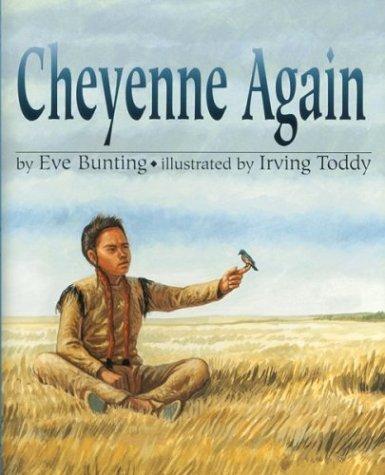
Cheyenne Again is a story about a young Cheyenne boy
who is taken away from his home and forced to attend a boarding school against
the will of his family and himself. This
boarding school is much different from the life his is used to. They are forced to attend class where he
cannot understand the language of the teachers.
He sleeps in a room with all the other students. They cut off all of his hair and try to wash
away all traces of his former Native American life. At one point he even tries to run away and go
home but he is captured and punished.
There is one teacher who gives him ointment to heal his wounds from the
punishment that is afflicted on him. The
only remnants of his former lifestyle are in his dreams and memories. He can only think about the way life was and
the way it would’ve been if he was home with his tribe.
This is would be a great book to have in a classroom library
because many students do not learn about how difficult life was for the Native
Americans once their land was taken over in the 1800s by the Americans. The Native Americans were forced to become
Americanized through the boarding schools.
This is an important aspect to teach students and I feel that it would
be more beneficial to read this book in upper elementary school and middle
school. This book was also easy to read
and had wonder illustrations that were such a great supplement to the text. This is an aspect of multiculturalism that is
rarely focused on. When we think of
multiculturalism, we tend to think of different cultures. I think Native Americans tend to be
overlooked because they have always been residents of the United States. We are actually the ones that are different
from them.
This book would be a great example to show students that the
text does not follow conventional writing formats. It is almost written as if it was a poem but
it wasn’t. This book also includes the
dialect of the Cheyenne people. Eve
Bunting writes the responses and reactions of the young Cheyenne boy just like
a young boy who has had limited English language exposure would hear and
respond to the English speaking teachers.
The ELA MA Curriculum Frameworks that this book incorporates
are ELA.4.L.2.03. Use
knowledge of language and its conventions when writing, speaking, reading, or
listening, ELA.4.RI.1.01. Refer to details and examples in a text when
explaining what the text says explicitly and when drawing inferences from the
text., and ELA.4.RI.1.03. Explain events, procedures, ideas, or concepts in a
historical, scientific, or technical text, including what happened and why,
based on specific information in the text.

No comments:
Post a Comment